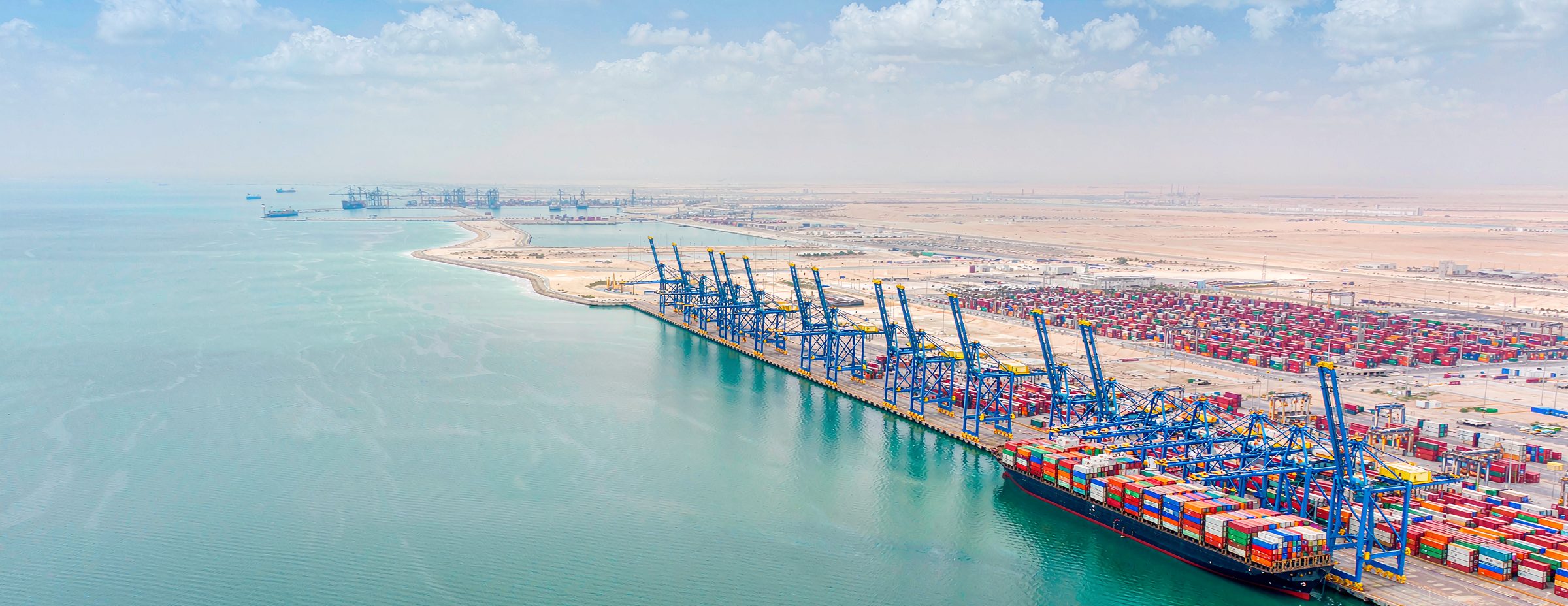
The Gulf is not one customs territory.
The six GCC members share one 5% tariff — and then charge six different VAT regimes. Egypt and Jordan tax on a different base. Iraq has no general VAT at all. Every market below states its own rate, its own clearance path and its own timing. We never quote a regional average.

Nine markets, each with its own file.
Every lane below has a page stating the tax rate, the clearance path, the ports, the realistic transit time and what actually holds a shipment. If a market is not on this list, ask — we will say plainly whether we run it.

Saudi Arabia
Saudi Arabia charges 15% import VAT on the duty-paid value — the heaviest tax stack in the Gulf. Two gates sit in front of it: SABER conformity for regulated goods, and ZATCA invoicing. We file both before the box leaves China.
Get a quote
United Arab Emirates
The UAE is the Gulf's lightest tax load and its most flexible clearance route. Goods staying inside a designated free zone — Jebel Ali among them — carry neither duty nor VAT until they enter the mainland.
Get a quote
Kuwait
Kuwait carries the 5% GCC tariff and currently no import VAT — the lowest tax stack of the six Gulf states. The real gate is the import licence, which is reserved for Kuwaiti citizens or registered intermediaries.
Get a quote
Qatar
Qatar pays the 5% GCC tariff with no import VAT today. World Cup infrastructure and a population that buys everything locally make Doha the easiest Gulf market on paper — and the licence rules are the part to settle early.
Get a quote
Oman
Oman runs the GCC's 5% tariff with 5% VAT — the same shape as the UAE, with far less competition for warehousing and a shorter drive into Muscat.
Get a quote
Bahrain
Bahrain raised VAT to 10% — the second-highest rate in the Gulf after Saudi Arabia, but the smallest market by population. Efficient for Manama and the eastern Saudi corridor.
Get a quote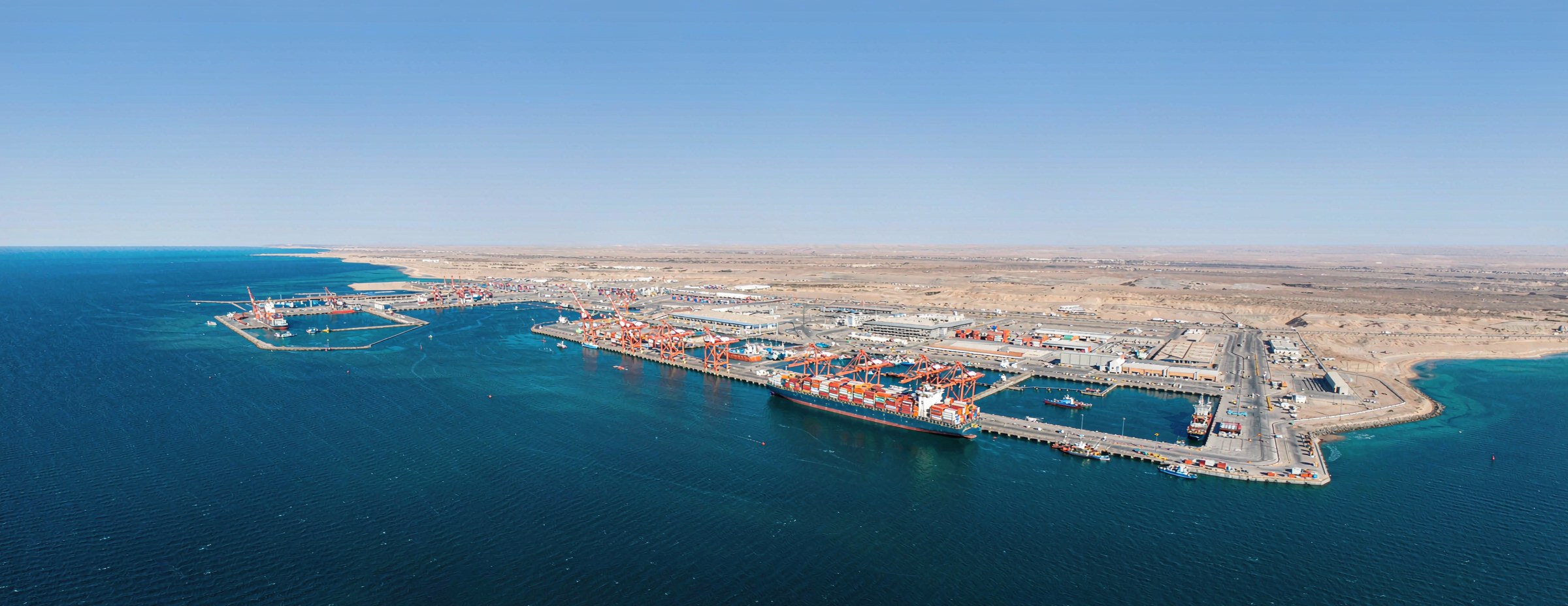
Egypt
Egypt is not a GCC lane and we price it differently. Duty runs 0–60% by HS code, and 14% VAT is charged on CIF plus duty — a cascading structure that quietly doubles the tax bill on an unclassified product.
Get a quote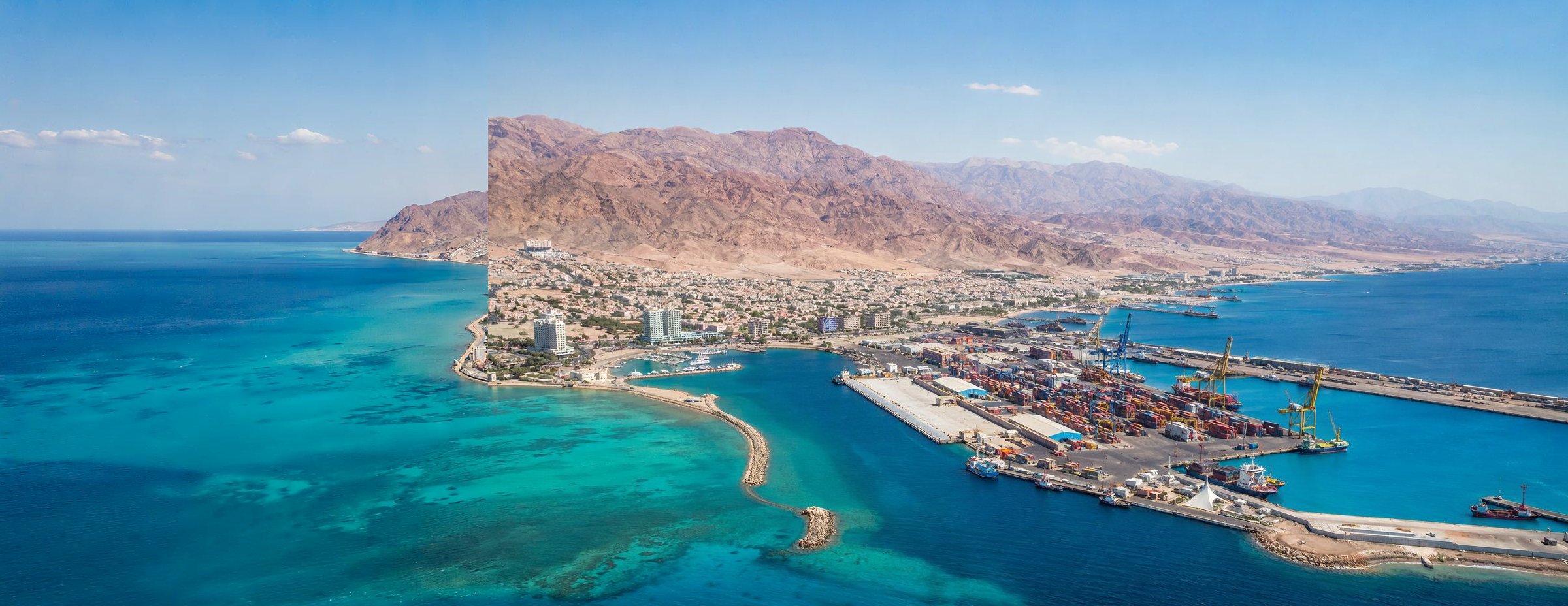
Jordan
Jordan has one seaport and one airport, so the route is fixed: Aqaba for sea, Queen Alia for air. The 16% GST lands on CIF plus duty, and JSMO conformity is the most common cause of a container being held.
Get a quote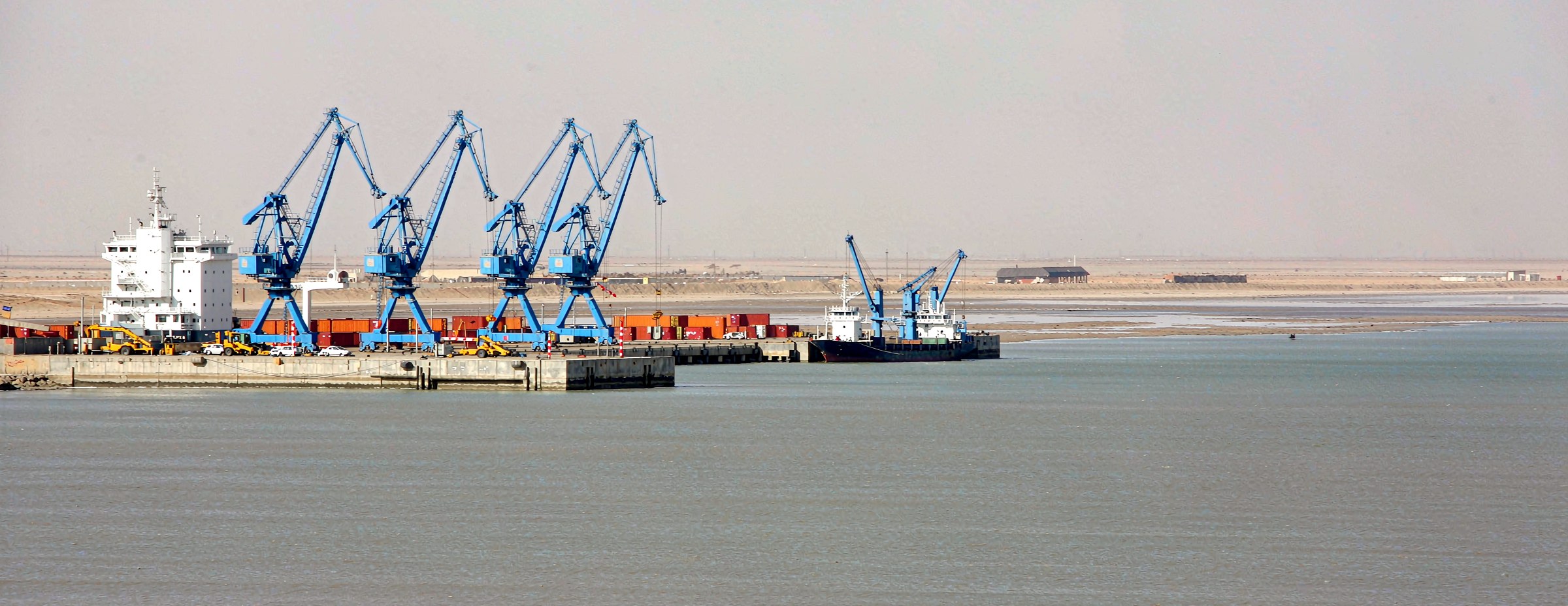
Iraq
Iraq is the hardest lane we run and we quote it case by case. There is no general VAT, but the Kurdistan Region operates its own customs administration at Erbil and Sulaymaniyah, and customs documents must be legalized. Sea cargo almost never sails direct: it transships through Jebel Ali or Aqaba and moves on a feeder, and the Strait of Hormuz is the real constraint on every sailing.
Get a quoteThe tax, in one table.
Duty is confirmed against the HS code of your product before you commit; the duty column below is the standard rate for each market. VAT in the Gulf is charged on the duty-paid value — which is why the Saudi figure looks large next to the UAE one.
| Market | Import VAT | Standard duty | Transit (air · sea) | Guide |
|---|---|---|---|---|
| Saudi Arabia | 15% import VAT prepaid | 5% GCC tariff on CIF | 6–12 days air DDP · 28–35 days sea LCL | Full guide → |
| United Arab Emirates | 5% import VAT prepaid | 5% GCC tariff on CIF | 6–11 days air DDP · 26–32 days sea LCL | Full guide → |
| Kuwait | No import VAT (GCC framework still in parliament) | 5% GCC tariff on CIF | 7–13 days air DDP · 30–38 days sea LCL | Full guide → |
| Qatar | No import VAT (5% framework planned, no start date) | 5% GCC tariff on CIF | 7–13 days air DDP · 30–38 days sea LCL | Full guide → |
| Oman | 5% import VAT prepaid | 5% GCC tariff on CIF | 8–14 days air DDP · 28–34 days sea LCL | Full guide → |
| Bahrain | 10% import VAT prepaid | 5% GCC tariff on CIF | 7–13 days air DDP · 30–38 days sea LCL | Full guide → |
| Egypt | 14% import VAT on CIF + duty | 0–60% by HS code (many lines 5–20%) | 10–16 days air DDP · 30–40 days sea LCL | Full guide → |
| Jordan | 16% GST on CIF + duty | 0–30% by HS code | 9–15 days air DDP · 30–40 days sea LCL | Full guide → |
| Iraq | No general import VAT | 0–30% (many products at a uniform 5%) | 10–18 days air DDP · 35–45 days sea LCL | Full guide → |
Read the full guide before you compare rates across the table. A low-VAT country is not automatically cheaper: Saudi Arabia exempts books and some medical devices from duty, and its conformity requirement adds a step that has nothing to do with tax.
Questions worth asking before you pick a lane.
Which market is cheaper to land goods in?
Can I ship to one country and truck onward?
Who is the importer of record?
Do you ship to Iraq?
What happens if the tariff changes after I quote?
Not sure which lane your goods belong on?
Send the product link and the destination city. We will tell you the duty band, whether it needs conformity certification, and which lane fits — including the ones we would not recommend.